Page 2 – Creative Workflow & Analysis
This page explains how I currently create videos for ElectroSparklez and why some recent uploads perform very differently. Even when the gameplay quality is similar, topic choice + thumbnail + title can change whether YouTube recommends the video to new viewers.
My creative workflow
- Idea selection: I usually focus on Geometry Dash updates, new event levels, secrets, or trending challenges/levels.
- Recording: Screen capture + my live reactions recorded together (Xsplit Broadcaster), so the energy feels real.
- Editing: I cut downtime, tighten pacing, and keep the most interesting reactions or moments. For audio, I process my microphone through Audacity using compression, limiting and loudness normalisation, and use Youlean Loudness Meter to make sure the final levels are consistent and suitable for YouTube.
- Thumbnail creation: I build thumbnails in Photoshop using screenshots from my own gameplay. When needed, I use AI only to enhance a specific part (for example: cleaning an edge, boosting clarity, improving glow, or removing small artifacts) instead of recreating the whole image. That keeps the thumbnail authentic while adding polish.
- Final packaging: I choose a title that promises a clear outcome (secret, reward, unlock, challenge), I use thumbnail and title A/B testing on YouTube to figure out which thumbnail or title viewers prefer.
- After upload: I check impressions, CTR, and early view velocity to learn what worked and what didn’t, and monitor A/B testing results.
Best-performing thumbnails
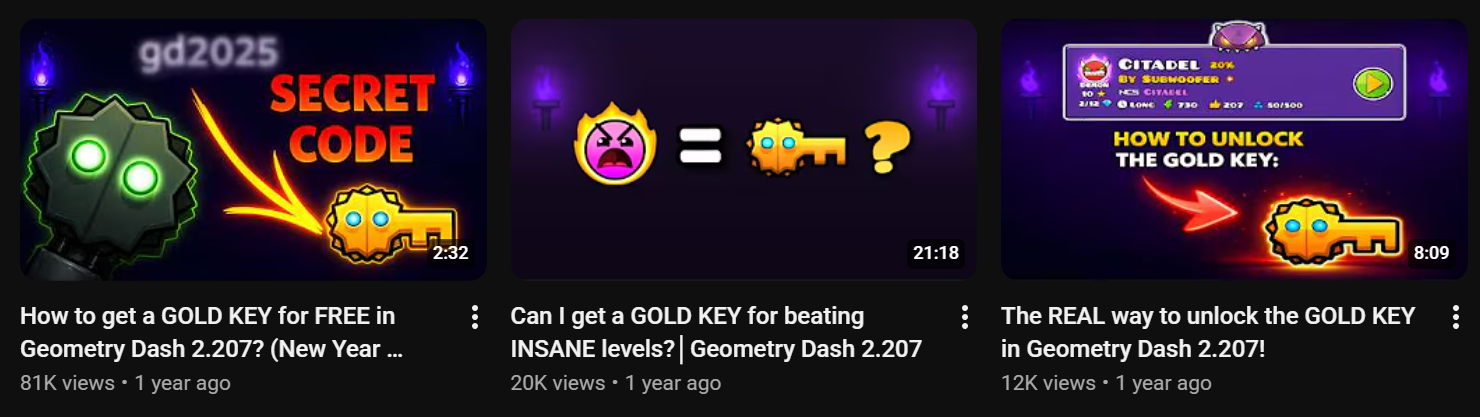
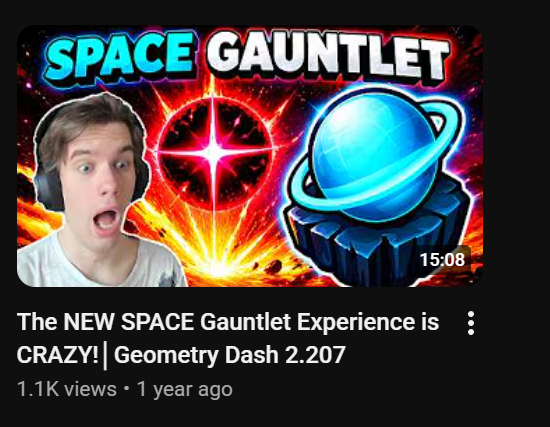
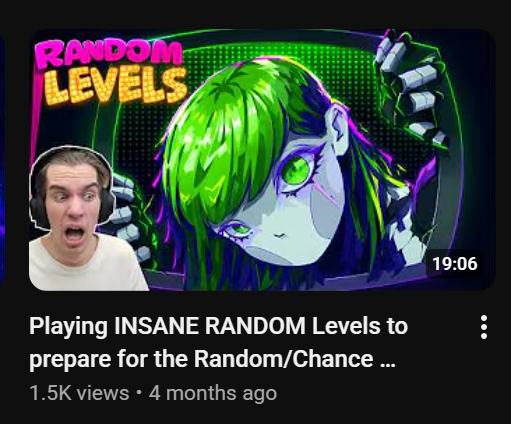
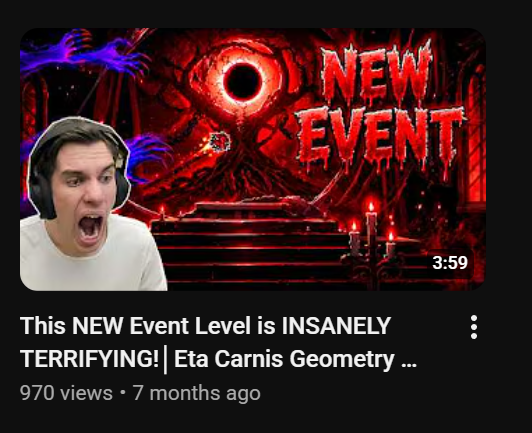
These are examples of videos that performed well. In my channel, the strongest patterns are usually: clear reward/goal, high contrast, and a strong face reaction that communicates emotion instantly.
Underperforming thumbnails
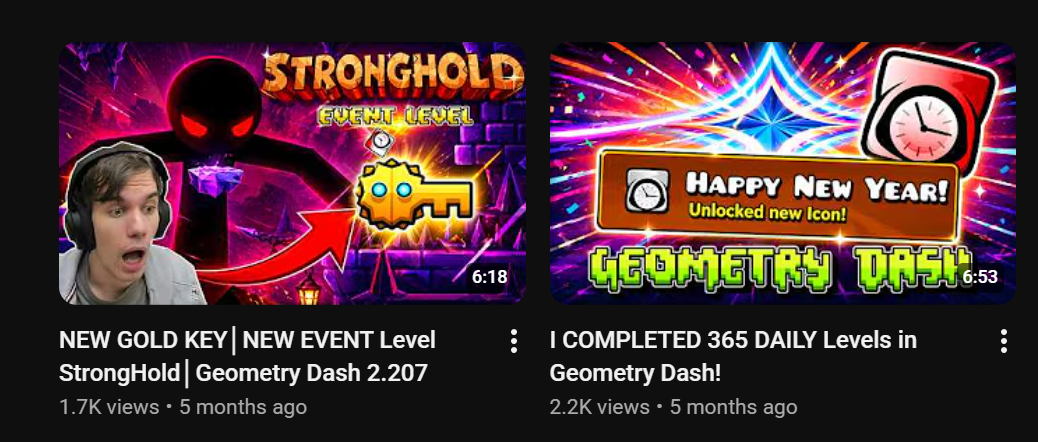
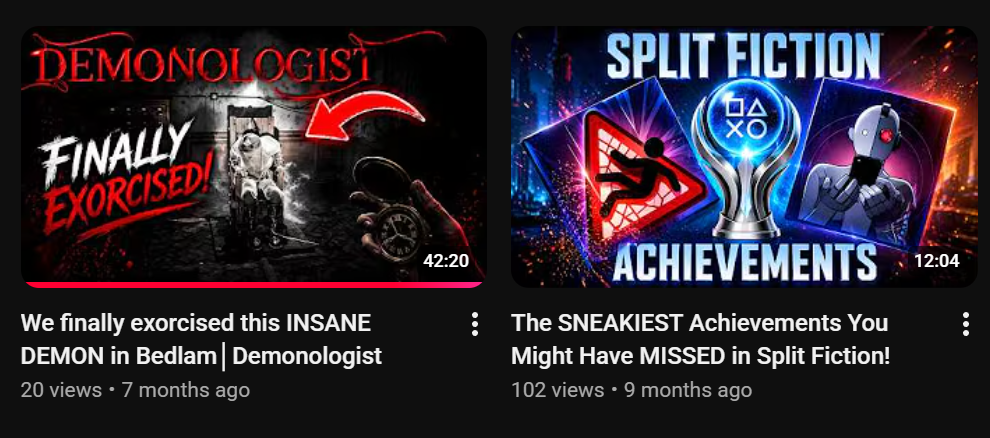
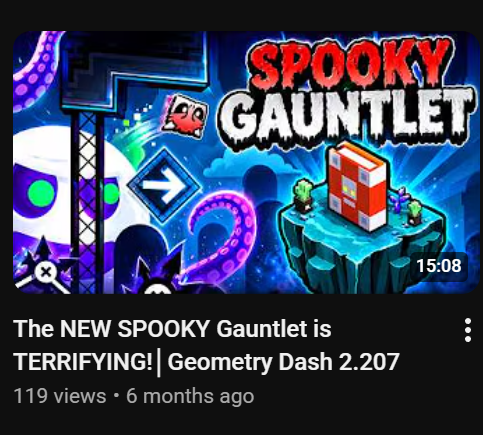
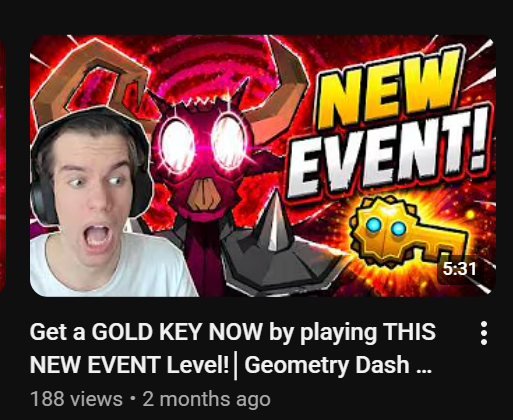
These examples show videos that underperformed compared to my usual Geometry Dash uploads. The main reasons tend to be: weaker instant message, less emotional hook, or a topic that isn't currently trending. Also, even Geometry Dash videos can fail sometimes if the packaging doesn't "click" fast enough.
Exceptions that still performed
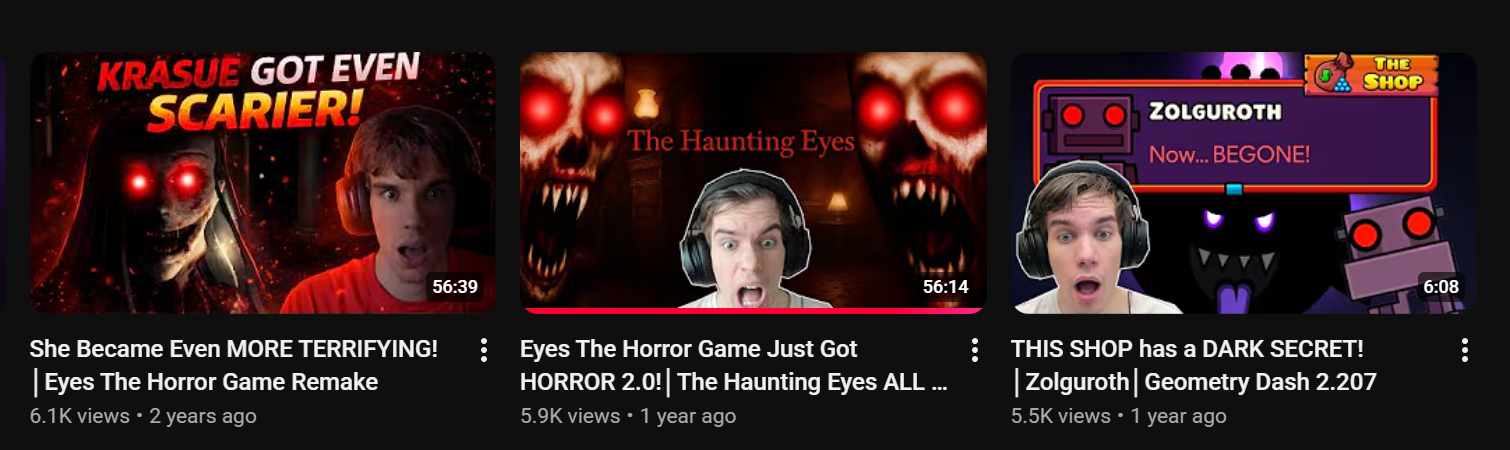
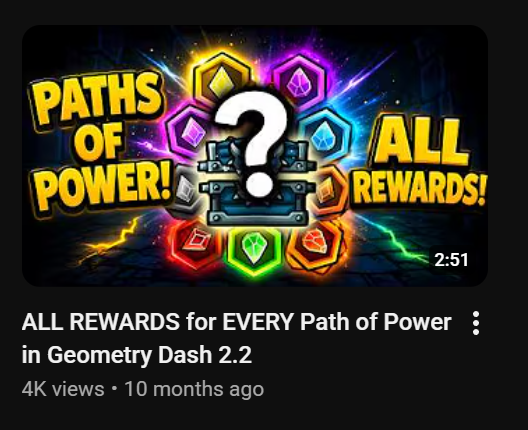
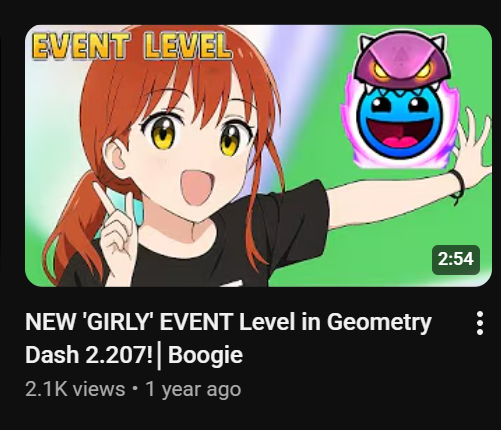
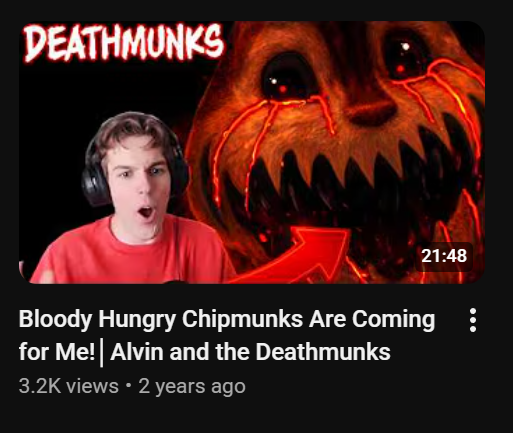
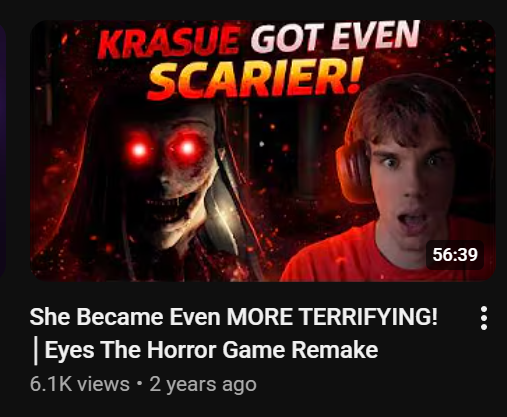
My face reaction is usually the strongest signal in a thumbnail — it communicates emotion instantly and stops the scroll. But it is not the only thing that works. Sometimes a thumbnail performs well without a face reaction at all, as long as it has a cute/interesting character with a clear GD connection, or a concept that is genuinely curiosity-inducing on its own. Horror games follow a similar logic: even though my audience mostly expects Geometry Dash, a horror video can still break through if the thumbnail is high quality, the subject is visually striking, and the topic has either historical interest or strong shock value. The common thread across all exceptions is that something in the image does the emotional work that a face reaction normally would.
What this teaches me
- Face reactions matter: emotion is a shortcut for attention when people scroll fast. But it is not the only path — a strong character, striking visual, or high quality horror concept can do the same job.
- Clarity wins: if the viewer can't understand the promise instantly, CTR usually drops. The thumbnail needs to answer "why should I click this?" in under a second.
- Topic timing matters: GD updates, secrets, and rewards often get pushed more by recommendations. Being late to a trend, even with a good video, can cut your reach significantly.
- Even "good" videos can fail: sometimes packaging or timing is the difference, not effort. A video I am proud of can underperform simply because the topic wasn't trending that week.
- Exceptions are worth studying: the videos that broke my own patterns taught me the most. When something performs well for unexpected reasons, that is more valuable data than another expected success.
I keep improving by comparing what works vs what doesn't and adjusting accordingly. Not every video will perform well — trends shift, timing matters, and YouTube recommends millions of videos every minute. What matters more than any single upload is the pattern you build over time: consistent quality, honest reflection, and staying curious about why things work.